Board Composition in Asset Management: The Skills Gap Nobody Talks About
Most asset management boards are over-indexed on investment experience and under-indexed on technology, operations, and distribution expertise. A frank assessment of the board composition problem and what to do about it.
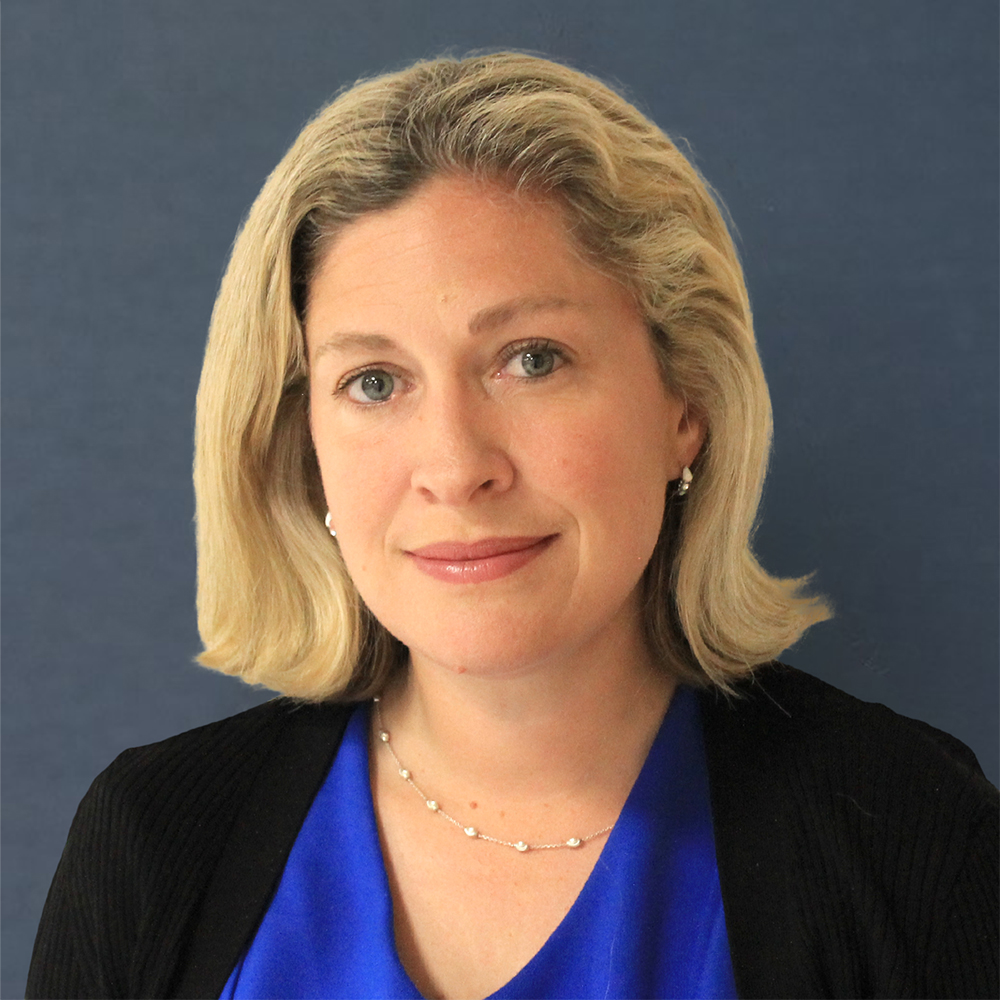
Amanda Floyd
Managing Director
Ask a board chair at a UK asset manager to describe their board's composition, and you'll hear something familiar: "We have deep investment experience around the table." This is almost always true. It is also, increasingly, insufficient.
The typical asset management board is populated by people who understand investing. Former CIOs. Ex-portfolio managers. Retired CEOs who came up through the investment side. People who can challenge management on asset allocation, risk positioning, and market outlook. These are valuable perspectives, and no asset management board should be without them.
But investment experience has become the default qualification for board membership in this sector, crowding out the expertise that modern asset managers actually need from their governance. The result is boards that can interrogate one dimension of the business brilliantly while governing the rest of it essentially blind.
The composition problem
I've spent a meaningful portion of the last several years working on NED searches for asset managers and pension funds. The pattern is consistent enough to describe with confidence.
A board of seven to nine directors at a mid-sized UK asset manager will typically include three or four people with investment backgrounds, one or two with general financial services leadership experience, one with an audit or finance background, and perhaps one with regulatory or legal expertise. The total board investment experience might exceed a hundred years.
Now ask: how much technology leadership experience is around the table? In most cases, the answer is none. Not "limited", but none. No one who has built or overseen a technology strategy. No one who can evaluate whether management's data infrastructure plans are credible. No one who can distinguish a genuine AI strategy from a slide deck full of ambition.
How much distribution expertise? Again, typically none. The people responsible for governing an asset manager's commercial strategy, how it raises and retains assets, have often never run a distribution function.
How much operational expertise, not finance, but genuine operational leadership in complex, regulated environments? Rarely more than one director, and often zero.
The result is a board that can challenge management on perhaps 30% of the decisions that will determine the firm's success, while nodding along to the other 70% because it lacks the competence to do anything else.
Why this matters now
This skills gap has always existed to some degree. What's changed is the cost of it.
When asset management was primarily an investment-judgement business, when the technology was simple, distribution was relationship-driven, and operations were a cost centre that didn't require board attention, a board full of investment experts was fit for purpose. The business was, in essence, the investment process, and the board's job was to oversee it.
That world no longer exists. Technology is now a strategic capability that determines investment outcomes, operational resilience, and competitive positioning. Distribution has become a complex, multi-channel, data-driven function that requires strategic oversight. Operations, including cybersecurity, data governance, outsourced provider management, and regulatory technology, has moved from back-office function to existential risk.
A board that cannot challenge management on these dimensions is not providing effective governance. It is providing the appearance of governance while leaving significant risks unsupervised.
Consider a practical example. An asset manager's leadership team proposes a major technology investment: a new data platform that will cost several million pounds and take two years to implement. The board needs to evaluate whether the investment is strategically sound, whether the proposed approach is realistic, whether the vendor selection is defensible, and whether the implementation plan accounts for the risks that typically derail technology programmes in financial services.
Without directors who have relevant technology experience, the board is relying entirely on management's assessment of management's own proposal. This is not governance. This is endorsement.
The NED supply problem
The obvious response is: appoint directors with technology, operations, and distribution experience. This is easier said than done.
The pool of qualified NED candidates who combine senior technology leadership experience with sufficient understanding of asset management to be effective board members is small. Technology leaders from outside financial services often lack the regulatory context and industry-specific knowledge to contribute meaningfully from day one. Technology leaders from within financial services are in high demand and may not be at a career stage where NED appointments are attractive.
The distribution expertise gap is similarly difficult to fill. Senior distribution leaders in asset management tend to be commercially active well into their fifties and sixties. They're running businesses, not sitting on boards. And the skills that make someone an excellent head of distribution, such as commercial instinct, relationship management, competitive awareness, are not always accompanied by the governance skills that effective board service requires.
For operations and technology, there's an additional challenge. The FCA's Senior Managers and Certification Regime means that NED appointments carry personal regulatory accountability. Experienced operations and technology leaders from outside financial services may be reluctant to take on the regulatory burden associated with a board seat, particularly for the compensation levels that most asset management NED roles offer.
The NED supply challenge is real, but it is not an excuse for inaction. It means boards need to search harder, look in less obvious places, and be willing to invest in candidates who bring the right expertise even if they don't fit the traditional NED profile.
The regulatory dimension
The FCA has been increasingly explicit about its expectations for board competence. The emphasis on operational resilience, in particular, implies that boards should be able to challenge management on technology, outsourcing, and cyber risk, topics that require specific expertise to oversee effectively.
More broadly, the FCA's focus on culture and governance creates an expectation that boards will provide genuine independent challenge, not just formal oversight. A board that rubber-stamps management's technology strategy because no director has the knowledge to question it is not meeting this expectation, even if every other aspect of its governance is exemplary.
The regulatory direction is clear: boards will be held accountable not just for what they oversee, but for whether they have the competence to oversee it. Asset management boards that remain over-indexed on investment experience are carrying a growing governance risk.
Five questions for board self-assessment
Before commissioning a formal board evaluation or a skills audit, boards can start with five straightforward questions.
One: If our technology strategy is wrong, would we know? Not "would we eventually find out when something went wrong," but "do we have the board-level expertise to evaluate whether management's technology decisions are sound before they're implemented?" If the answer is no, the board has a technology governance gap.
Two: Can we meaningfully challenge management on distribution effectiveness? Raising and retaining assets is the commercial lifeblood of an asset manager. If the board cannot evaluate whether the distribution strategy is working, beyond looking at net flow numbers after the fact, it is governing a critical function reactively rather than proactively.
Three: Do we understand our operational risk exposures? Not the risk register that management presents at quarterly meetings, but the real operational risks: cyber, third-party provider failure, data integrity, key-person dependencies in operational functions. If the board's understanding of these risks comes entirely from management reporting, it may not understand them at all.
Four: When was the last time we appointed a director who didn't come from an investment background? If the answer is "we haven't" or "not recently," the board's composition is likely drifting towards homogeneity. Skills matrices are useful, but the simplest diagnostic is to look at the last three to five appointments and ask what perspective each one added.
Five: Are we confusing experience with expertise? A director who spent thirty years in asset management has experience of technology, distribution, and operations, in the sense that these functions existed in the firms where they worked. But experience of working alongside a technology function is not the same as expertise in technology strategy. Boards should be honest about the difference.
Practical recommendations
For boards that recognise the skills gap, several practical steps can make a meaningful difference.
Redefine the NED profile. The next time a board seat becomes available, resist the default of appointing another investment expert. Write a NED specification that explicitly prioritises technology, operations, or distribution expertise. Accept that the candidate may have less asset management experience than previous appointees, and design their onboarding accordingly.
Look beyond the usual networks. The NED candidates who will close the skills gap are not in the same networks that produced the current board. They're in technology leadership forums, operational resilience working groups, and distribution leadership roles at firms across financial services. Search processes that rely on existing board members' personal networks will reproduce the existing board's skill profile.
Consider advisory board structures. If the main board cannot accommodate the expertise it needs, whether because of size constraints or regulatory considerations, an advisory panel of technology, operations, and distribution experts can provide structured input on specific strategic decisions. This is not a substitute for board-level competence, but it's better than nothing.
Invest in board development. Existing directors can develop new competencies through targeted education programmes, not generic governance training, but deep dives into technology strategy, data governance, and operational resilience specific to asset management. This won't turn an investment expert into a technology expert, but it can raise the board's baseline literacy to a level where meaningful challenge becomes possible.
Normalise board rotation. Some asset management boards have directors who have served for a decade or more. Long tenure brings continuity but also calcification. Regular rotation, genuinely regular, not aspirational, creates opportunities to refresh the board's skill profile as the business evolves.
The governance imperative
The asset management industry is undergoing a structural shift. Technology, operations, and distribution are no longer support functions. They are strategic capabilities that determine which firms thrive and which decline. Boards that cannot govern these capabilities are not governing the business as it actually is. They are governing a version of the business that existed ten years ago.
The skills gap on asset management boards is not a minor composition issue. It is a governance failure that carries real risk: strategic risk, regulatory risk, and reputational risk. Addressing it requires boards to be honest about what they don't know, courageous about appointing directors who bring genuinely different perspectives, and disciplined about ensuring that board composition keeps pace with the business it oversees.
The investment expertise around the table is valuable. It's just no longer enough.
About the author
Amanda Floyd
Managing Director
Amanda is the Managing Director at Riversmeet, specialising in executive search and leadership advisory for asset management and investment-led financial services. She brings deep sector relationships and a consultative approach to every engagement.